What Items Can You Store in a Self Storage Unit? Complete Storage Guide
When people first hear about self storage, the most common question they ask us at SafeStorage is delightfully simple: “So what can I actually keep in there?” The honest answer is — far more than you would imagine, and a few things you absolutely should not. After helping over a lakh customers across more than sixteen Indian cities and Dubai move and store their belongings, we have seen everything from a single grandmother’s almirah to the full inventory of a growing e-commerce business. This guide walks you through exactly what belongs in a storage unit, what does not, and how to make smart decisions about your space.
The Most Common Things People Store
The vast majority of what comes through our facilities falls into a handful of familiar categories. Household furniture leads the list by a wide margin — beds, sofas, dining sets, wardrobes, and mattresses from families who are relocating, renovating, or simply downsizing. Right behind it sits the everyday clutter of modern life: cartons of books, kitchenware, clothing, and the seasonal items that only see daylight a few weeks a year.
Storage is rarely about hoarding. More often it is about timing. A family moving from a 3BHK to a temporary 2BHK while their new home is being finished needs somewhere safe to keep the extra furniture for a few months. A working professional posted abroad for a year does not want to sell everything they own. Storage simply gives your belongings a clean, secure pause until life settles down again.
Household and Furniture Items
1. Sofas, beds, mattresses, dining tables, and chairs
2. Wardrobes, almirahs, chest of drawers, and shoe racks
3. Kitchen appliances such as microwaves, mixers, and refrigerators
4. Cartons of crockery, utensils, books, and clothing
5. Decor items, paintings, curtains, and soft furnishings
Appliances and Electronics
Televisions, washing machines, air conditioners, and similar appliances store very well when they are cleaned, dried, and packed correctly. The one rule we insist on is that anything with water lines — washing machines, water purifiers, refrigerators — must be fully drained before storage. A small amount of trapped water can lead to mould or a bad odour over a few weeks, which is entirely avoidable with ten minutes of preparation.
Business and Commercial Storage
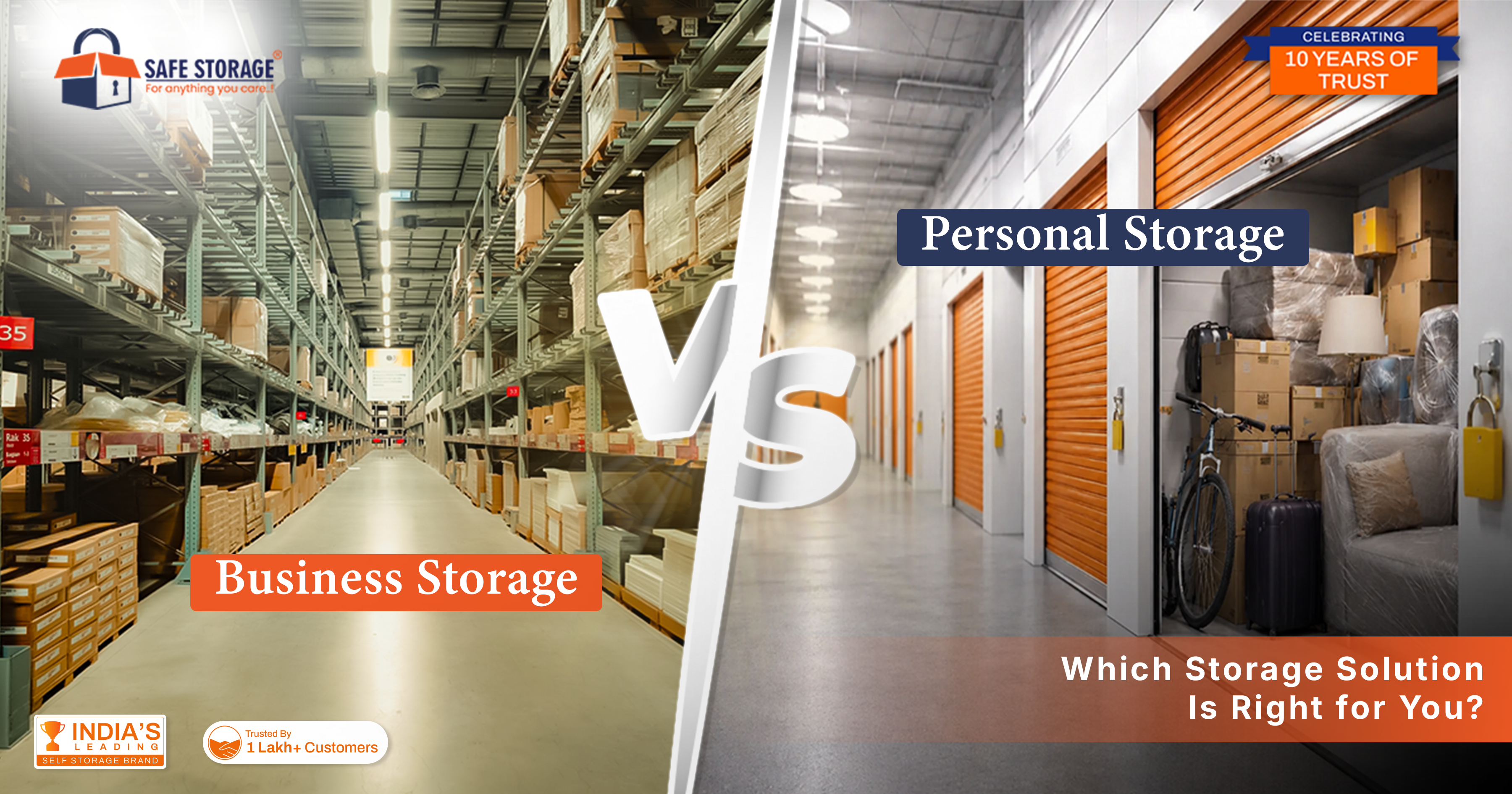
A growing share of our customers are not households at all — they are businesses. E-commerce sellers store inventory close to the city without paying premium retail rent. Small offices keep their archived documents, old furniture, and exhibition material with us between projects. Restaurants and event companies park seasonal equipment during their off months. For a business, storage is a flexible warehouse you can scale up or down without signing a long lease, and that flexibility is often the difference between holding stock confidently and turning down orders.
What Businesses Typically Store
1. Product inventory and packaged stock for online sellers
2. Archived files, records, and documents requiring safe keeping
3. Surplus office furniture, workstations, and IT equipment
4. Trade show displays, banners, and promotional material
5. Seasonal or event equipment used only part of the year
Special and High-Value Items
Some belongings need a little extra thought. Two-wheelers and bicycles store easily once the fuel tank is emptied and the battery terminal is disconnected. Musical instruments, artwork, and antiques are perfectly storable but benefit from careful wrapping and, where possible, a climate-aware location away from direct sunlight and damp. We always advise customers to photograph high-value items before storage and to keep a simple inventory list — it makes both peace of mind and any future claim far easier.
For documents and valuables, our guidance is straightforward: store the bulk paperwork, but keep truly irreplaceable originals — passports, property deeds, jewellery — with you or in a bank locker. A storage unit is built for volume and convenience, not as a substitute for a vault.
What You Should Never Store
This is the part of the conversation we never skip, because it protects your belongings and everyone else’s. There are items that simply do not belong in a self storage unit, and reputable operators in India will not accept them. Knowing this list upfront saves a wasted trip and keeps the facility safe for all customers.
Prohibited Items
1. Perishable food, plants, or anything that can rot or attract pests
2. Flammable, explosive, or hazardous materials — petrol, gas cylinders, paints, and chemicals
3. Illegal goods, firearms, or unlicensed weapons of any kind
4. Live animals or pets — a storage unit is never a home for anything living
5. Wet, damp, or improperly cleaned items that can spread mould
6. Cash, jewellery, and irreplaceable original documents — better kept in a bank locker
The reasoning behind each of these is practical rather than bureaucratic. Perishables attract rodents and insects that can damage neighbouring units. Flammable materials are a fire risk in a closed, shared environment. And living things, of course, cannot be safely confined. When a customer is unsure whether an item qualifies, the simplest test is to ask: could this rot, leak, catch fire, or breathe? If yes, it stays out.
How to Decide What to Store
Once you know what is allowed, the real skill is deciding what is worth storing at all. We encourage customers to sort their belongings into three honest piles before booking a unit. The first is what you use regularly — that stays with you. The second is what you do not use now but genuinely want to keep — that is your storage pile. The third is what you have simply outgrown — that is best sold, donated, or discarded. Paying month after month to store things you will never use again is the one mistake we gently steer people away from.
Sizing the unit correctly comes next. A rough thumb rule we share with families: the contents of a 1BHK usually fit comfortably in a small unit, a 2BHK in a medium one, and a 3BHK or villa in a large unit. You do not need to calculate this alone — our team assesses your list over a quick call and recommends the right size, so you never pay for empty air or cram a unit until the door will not close.
Why Customers Choose SafeStorage
What sets professional storage apart from renting a random godown is everything that happens around the box. SafeStorage handles doorstep pickup, careful packing,transport, secure warehousing, and delivery back to you when you need it. Our facilities are monitored, access is controlled, and your unit is yours alone. For most of our customers, the relief is not just the extra space at home — it is knowing their belongings are looked after by a team that does this every single day, with a 4.9-star track record built over a decade since 2015.
Whether you are a family between homes, a professional heading abroad, or a business that has outgrown its storeroom, the question is rarely whether your items can be stored — almost always, they can. The real value is in storing the right things, the right way, with the right partner.
Frequently Asked Questions
1. What is the most common item people store?
Household furniture is by far the most stored category — beds, sofas, wardrobes, and dining sets from families who are relocating, renovating, or downsizing. Cartons of books, clothing, and kitchenware follow closely behind.
2. Can I store electronics and appliances?
Yes. Televisions, washing machines, air conditioners, and refrigerators store well when cleaned, dried, and packed properly. Anything with water lines must be fully drained before storage to prevent mould and odour.
3. Can businesses use self storage?
Absolutely. E-commerce sellers store inventory close to the city, offices archive documents and surplus furniture, and event companies park seasonal equipment. Storage works as a flexible warehouse you can scale up or down without a long lease.
4. Can I store my two-wheeler or bicycle?
Yes. Two-wheelers and bicycles store easily once the fuel tank is emptied and the battery terminal is disconnected. We recommend covering them to keep dust off during longer storage periods.
5. What items are not allowed in a storage unit?
Perishable food, plants, flammable or hazardous materials, gas cylinders, illegal goods, weapons, and live animals are never permitted. Wet or improperly cleaned items are also refused because they can spread mould to neighbouring units.
6. Is it safe to store valuables and documents?
You can store bulk paperwork and most belongings safely, but truly irreplaceable originals — passports, property deeds, and jewellery — are better kept with you or in a bank locker. A storage unit is built for volume and convenience, not as a vault.
7. How do I know what size unit I need?
As a thumb rule, a 1BHK fits a small unit, a 2BHK a medium unit, and a 3BHK or villa a large unit. Our team assesses your item list over a quick call and recommends the right size, so you never overpay or overstuff.
8. How long can I keep my items in storage?
There is no fixed limit — you can store for a few weeks or several years. Most customers store between three months and a year, typically while moving homes, working abroad, or waiting on a renovation.
9. Will my belongings be safe?
Yes. SafeStorage facilities are monitored, access is controlled, and your unit is yours alone. We also recommend photographing high-value items and keeping a simple inventory list for added peace of mind.
10. Does SafeStorage handle pickup and delivery?
Yes. We manage doorstep pickup, packing, transport, secure warehousing, and delivery back to you when you need your items. You do not have to arrange a vehicle or move anything yourself.
Final Thoughts
The question is almost never whether your belongings can be stored — in nearly every case, they can. The real value lies in storing the right things, the right way, with a partner who does this every day. Sort your belongings honestly, keep only what you genuinely want to return to, leave out anything that can rot, leak, catch fire, or breathe, and choose a unit sized to your actual needs.
Over the past decade, SafeStorage has helped more than a lakh customers across 16+ Indian cities and Dubai reclaim space without parting with the things that matter to them. Whether you are a family between homes, a professional heading abroad, or a business that has simply outgrown its storeroom, the right storage solution is only a phone call away.
Ready to free up space? SafeStorage picks up, stores, and delivers your belongings across 16+ Indian cities.
Call 8088848484 or visit safestorage.in for a free quote today
💬 Comments
Leave a Comment