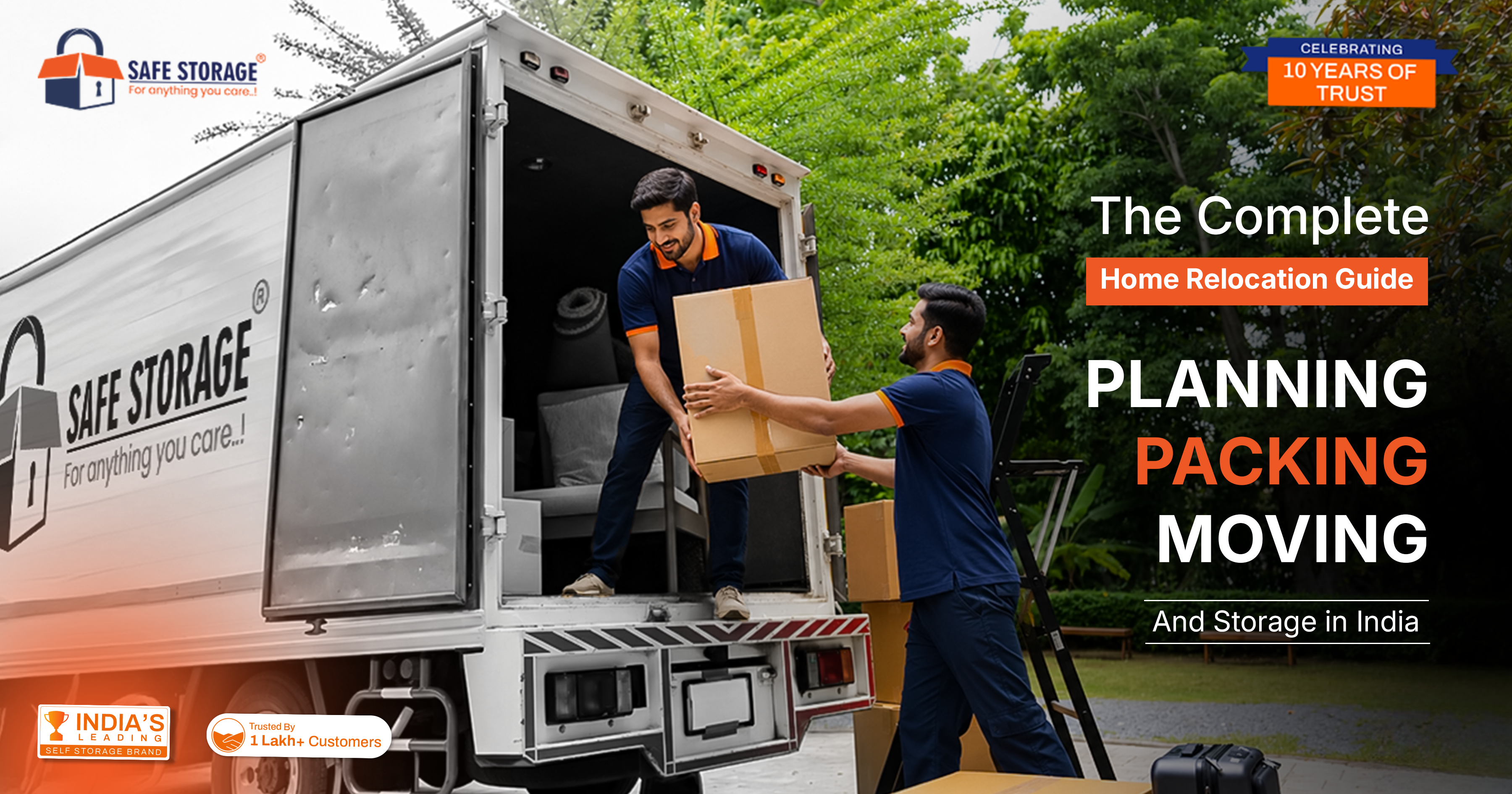
The Complete Home Relocation Guide: Planning, Packing, Moving & Storage in India
Relocating a home is rarely just about moving boxes from one place to another. It is about uprooting a life you have carefully built — the kitchen you know by heart, the wardrobe organised exactly the way you like it, the study where your child does homework — and rebuilding all of it somewhere new, often within a matter of days. For most families in India, a home move happens once every few years, which means the process never quite becomes familiar. You forget how much stuff accumulates, how long packing actually takes, and how quickly costs add up when things are not planned in advance.
At SafeStorage, we have helped over one lakh customers move, store, and manage their belongings across more than sixteen cities in India. Over the years, we have watched thousands of relocations succeed smoothly and seen a fair few turn stressful — almost always for reasons that were entirely avoidable. This guide brings together everything we have learned. Whether you are shifting within the same city, moving across states, or need a place to park your belongings between homes, this article walks you through planning, packing, the moving day itself, storage solutions, realistic costs, and the practical tips that make the difference between a chaotic move and a calm one.
Home Relocation Planning: Where a Smooth Move Really Begins
The single biggest predictor of a stress-free move is how early you start planning. In our experience, the families who begin four to six weeks before their moving date almost never face last-minute panic. Those who start three days before invariably do. Planning is not glamorous, but it is where you save the most money and protect yourself from the worst surprises.
Build a Moving Timeline
Work backwards from your moving date and break the process into weekly milestones. A realistic timeline for an average two or three bedroom home looks something like this:
1. Six weeks before: Decide your moving date, set a budget, and start decluttering room by room.
2. Four weeks before: Get quotes from packers and movers , book your slot, and arrange storage if there is a gap between homes.
3. Two weeks before: Begin packing non-essential items, notify your landlord or society, and transfer or update utilities.
4. One week before: Confirm the moving crew, pack an essentials box, and label everything clearly.
5. Moving day: Do a final walkthrough, check every room and cupboard, and supervise loading.
Declutter Before You Pack, Not After
One of the most common and most expensive mistakes we see is people paying to move things they do not actually want. Moving charges are largely driven by volume and weight, so every unnecessary carton is money spent transporting something you will likely discard anyway. Before you pack a single box, go room by room and separate your belongings into keep, donate, sell, and discard piles. It is far easier to make these decisions calmly in advance than while a crew stands waiting on moving day.
Create a Home Inventory
A written or photographed inventory of your belongings serves two purposes. First, it helps you keep track of what you own so nothing gets misplaced during transit. Second, it becomes essential documentation if you ever need to file an insurance claim for damage or loss. Photograph valuable and fragile items before they are packed, and note the condition of expensive furniture and appliances. This small habit has saved many of our customers considerable trouble.
Packing: The Part That Makes or Breaks Your Move
If planning is where you save money, packing is where you protect your belongings. Poorly packed items are the number one cause of damage during a move — not accidents on the road, but boxes packed too loosely, fragile items wrapped inadequately, and cartons stacked in the wrong order. Good packing is methodical rather than difficult.
1. Gather the Right Materials
Using proper packing materials is not an area to economise. The right supplies cost a fraction of what you would spend replacing a damaged television or a set of broken crockery. Stock up on sturdy corrugated cartons in a couple of sizes, bubble wrap, packing paper, strong tape, permanent markers, and stretch film for furniture. For clothes, wardrobe boxes with a hanging rail save enormous time and keep garments crease-free.
2. Pack Room by Room and Label Everything
Never mix items from different rooms in the same carton. Pack one room at a time, seal each box, and label it clearly on the top and at least one side with the room name and a short description of the contents. A box marked simply as “kitchen” is far less useful than one marked “kitchen — everyday plates and glasses.” This labelling discipline transforms the unpacking experience at the other end, letting you and the crew place each box directly in the right room.
3. Protect Fragile and Valuable Items
Wrap fragile items individually and cushion them with crumpled paper so nothing shifts inside the box. Plates travel best stacked vertically, like records, rather than laid flat. Fill every empty space in a carton — a half-empty box invites its contents to move and break. Keep documents, jewellery, medicines, and other high-value or irreplaceable items with you personally rather than loading them onto the moving vehicle.
4. Pack an Essentials Box
Set aside one clearly marked box or bag containing everything you will need for the first twenty-four hours in your new home: a change of clothes, toiletries, phone chargers, basic tools, snacks, water, important documents, and any daily medication. This is the box you carry yourself and open first. It spares you from rummaging through a mountain of cartons on your first exhausted night in a new place.
The Moving Day: Managing the Move Itself
By the time moving day arrives, most of the hard work should already be done. If you have planned and packed well, the day itself becomes a matter of coordination rather than crisis management.
1. Choosing Between DIY and Professional Movers
For a small studio or a single room with few belongings, a self-managed move using a hired vehicle can work and save money. But for a full household — heavy furniture, appliances, and dozens of boxes — professional packers and movers are almost always worth the cost. They bring the manpower, the equipment, and the experience to move bulky items safely, and a reputable service carries transit insurance that protects you against damage. Weigh the true cost of a DIY move, including your own time, the risk of injury, and the risk of damage, against a professional quote before deciding.
2. Supervise, Do Not Just Delegate
Even with an excellent crew, stay present and involved on moving day. Do a final walkthrough of every room, cupboard, loft, and balcony before the vehicle leaves — it is astonishing how often something is left behind in a rarely opened cabinet. Keep your inventory handy and tick items off as they are loaded and again as they are unloaded. Point out fragile boxes and specify which items you want handled with particular care.
3. The First Hours in Your New Home
Before the crew unloads, do a quick clean of the new space if you can, and decide where the large furniture will go so it can be placed correctly the first time rather than shuffled around later. Direct each labelled box to its room. Assemble beds and set up the essentials first so that, however tired you are, you have somewhere to sleep and the basics to function the next morning.
Storage Solutions: When Your Move Has a Gap
Not every relocation is a clean handover from one home to the next. Sometimes your new place is not ready, sometimes you are downsizing and need to hold on to belongings you are not ready to part with, and sometimes you are moving abroad temporarily and need a secure home for everything you own. This is where professional storage becomes invaluable, and it is the problem SafeStorage was built to solve.
When Storage Makes Sense During a Move
1. There is a gap between your move-out and move-in dates.
2. You are downsizing and need to store furniture or seasonal items you cannot fit yet.
3. You are renovating the new home before moving everything in.
4. You are relocating for work, temporarily, and need your belongings kept safe.
5. You simply have more than the new space can hold and want to declutter without discarding.
How Modern Managed Storage Works
Traditional self-storage expected you to rent a unit, transport your own goods, and manage everything yourself. Managed storage flips that around. With SafeStorage, our team comes to your doorstep, packs your belongings if you wish, and transports them to a secure, monitored warehouse. When you need something back — whether one box or everything — we deliver it to your door. You pay only for the space you actually use, with no long-term commitment.
What to Look for in a Storage Provider
Security should be your first question: look for CCTV monitoring, controlled access, and pest control. Ask about transit insurance so your goods are protected both in the warehouse and on the road. Understand the pricing model — whether you pay per box, per square foot, or a flat rate — and check for hidden charges on pickup and delivery. Finally, look for flexibility: the freedom to add or remove items and to end the arrangement when your move is complete, without penalties.
Understanding Moving and Storage Costs in India
Cost is the question on everyone's mind, and the honest answer is that it varies widely depending on the size of your home, the distance of the move, the number of belongings, and the services you choose. Rather than quote figures that may not match your situation, it helps to understand what actually drives the price so you can plan a realistic budget and avoid being overcharged.
What Determines the Cost of a Move
1. Volume and weight of goods: the single largest factor, which is why decluttering saves real money.
2. Distance: a local, within-city move costs far less than an intercity relocation across states.
3. Services chosen: packing, loading, unloading, unpacking, and furniture dismantling each add to the bill.
4. Access and floor level: buildings without lifts or with restricted vehicle access require more labour.
5. Insurance: transit cover adds a small percentage but protects a large amount of value.
Getting an Accurate Quote
Always insist on a proper survey — either an in-person visit or a video walkthrough — before accepting a quote. Vague estimates given over the phone without seeing your belongings are the most common source of disputes and inflated final bills. Get quotes from at least two or three providers, make sure each quote itemises what is included, and be wary of numbers that seem far below the rest, as they often hide extra charges that appear later.
Storage Costs: Paying Only for What You Use
Storage pricing has become far more transparent and affordable in recent years. At SafeStorage, plans start from as little as 99 per month, with zero deposit and no lock-in period, so you pay only for the space and duration you actually need. This matters especially during a move, when you may need storage for just a few weeks between homes and do not want to be locked into a long contract.
Expert Tips for a Stress-Free Relocation
Beyond the essentials, here are the practical lessons drawn from years of helping families move. These are the small things that experienced movers do almost without thinking, and that first-time movers usually wish they had known.
1. Start earlier than you think you need to — nearly everyone underestimates how long packing takes.
2. Photograph the back of your TV and electronics before unplugging so you can reconnect the cables correctly later.
3. Keep a small toolkit accessible for dismantling and reassembling furniture.
4. Move plants and pets separately, with care, as they are easily stressed and often forgotten in the rush.
5. Do not overpack cartons — a box you cannot lift comfortably is a box waiting to break or cause an injury.
6. Update your address for banks, subscriptions, and official records in the days around the move so nothing important goes missing.
7. Book your movers and storage well in advance, especially around month-ends and weekends when demand peaks.
8. Keep valuables, documents, and medicines with you personally at all times.
The Benefits of Professional Moving and Storage
It is worth stepping back to consider why so many families now choose professional help rather than managing a move entirely on their own. The value is not only in convenience but in the risk and stress it removes from an inherently disruptive process.
1. Safety of Your Belongings
Trained crews and proper materials mean your furniture, electronics, and fragile items are far less likely to be damaged. Combined with transit insurance, this protects both your possessions and your peace of mind.
2. Time and Energy Saved
A move consumes enormous time and physical effort. Handing the heavy lifting, packing, and transport to professionals frees you to manage the many other things a relocation demands, from paperwork to settling children into a new routine.
3. Flexibility and Cost Control
Modern managed storage lets you pay only for the space you use, add or remove belongings as your needs change, and avoid long-term commitments. For a move with an uncertain timeline, this flexibility is genuinely valuable.
4. A Single Point of Accountability
When one provider handles pickup, transport, storage, and delivery, there is no confusion about who is responsible if something goes wrong. This end-to-end accountability is one of the strongest reasons to choose an integrated service.
Frequently Asked Questions
1. How early should I start planning my home relocation?
Ideally four to six weeks before your moving date for an average home. This gives you enough time to declutter, gather quotes, book your movers and storage, and pack methodically without last-minute panic. Larger homes or intercity moves benefit from starting even earlier.
2. Is it cheaper to move myself or hire professional movers?
For a very small home with few belongings, a self-managed move can save money. For a full household with heavy furniture and appliances, professional movers are usually worth the cost once you account for your time, the risk of injury, and the risk of damage. Always compare a real quote against the true cost of doing it yourself.
3. How do I protect fragile items during a move?
Wrap each fragile item individually in bubble wrap or packing paper, cushion it with crumpled paper so it cannot shift, and fill every empty space in the box. Pack plates vertically rather than flat, label the box as fragile, and keep especially valuable items with you personally.
4. What factors affect the cost of moving?
The main drivers are the volume and weight of your goods, the distance of the move, the services you choose such as packing and unpacking, the accessibility of your buildings, and whether you opt for transit insurance. Decluttering before you move is one of the most effective ways to reduce cost.
5. When should I use storage during a relocation?
Storage is useful when there is a gap between your move-out and move-in dates, when you are downsizing, when you are renovating the new home first, or when you are relocating temporarily for work. It lets you keep your belongings safe without rushing or discarding them.
6. How does managed storage differ from traditional self-storage?
With traditional self-storage you rent a unit and handle transport yourself. With managed storage, as offered by SafeStorage, the team collects your belongings from your doorstep, stores them in a secure warehouse, and delivers them back when you need them. You pay only for the space you actually use.
7. Are my belongings insured while in storage or transit?
Reputable providers offer transit and storage insurance. Always confirm the coverage before committing, and keep a photographed inventory of your belongings so you have documentation should you ever need to make a claim.
8. What should I keep with me rather than load into the moving vehicle?
Keep documents, jewellery, cash, medicines, and any irreplaceable or high-value items with you personally. Also carry an essentials box with a change of clothes, toiletries, chargers, and basics for your first day in the new home.
9. Do I need to pay a deposit or commit to a long contract for storage?
Not with a flexible provider. SafeStorage offers plans starting at 99 per month with zero deposit and no lock-in period, so you can use storage for just a few weeks during a move without a long-term commitment.
10. How far in advance should I book movers and storage?
Book at least two to four weeks ahead, and earlier if your move falls on a month-end or weekend when demand is highest. Booking early gives you a better choice of slots and often better rates.
Final Thoughts
A home relocation will always involve some upheaval — there is no way to make moving your entire life feel effortless. But there is an enormous difference between a move that is chaotic and one that is merely busy, and that difference comes down almost entirely to preparation. Start early, declutter honestly, pack with care, and choose partners you can trust for the parts that are worth handing over. Treat storage not as an afterthought but as a genuine tool that gives you breathing room when timelines do not line up perfectly.
Done well, a move becomes less a source of dread and more a fresh start — which, after all, is what it is meant to be. Whether you need help moving across your city, storing your belongings between homes, or simply want an experienced team to take the weight off your shoulders, SafeStorage is here to make the journey to your new home a calm and confident one.
Ready to Move or Store With Confidence?
SafeStorage makes home relocation and storage simple — doorstep pickup and delivery, secure warehouses across 16+ cities, plans from 99/month, zero deposit and zero lock-in. Over 1 lakh customers trust us with their belongings.
Call 8088848484 | Visit safestorage.in



💬 Comments
Leave a Comment